











How creatine increases muscle strength and power?
Creatine is one of the most widely used supplements in sports and fitness, but why do so many athletes rely on it? This article breaks down how creatine works, why it improves strength and power, and what makes it effective. If you're looking to train harder and recover faster, understanding creatine is a smart first step.
From the article, you will learn:
- What creatine is and how it works in your body
- The practical benefits of creatine for muscle performance
- Why creatine monohydrate is still the most recommended form
- How creatine supplements fit into your training plan
- Misunderstandings around what does creatine do
- How BIOLAB ensures the highest quality product on the market
What is creatine and where does it come from?
Understanding what creatine is begins with recognising it as a compound found naturally in the human body, mainly in muscle tissue. It is synthesised from three amino acids: arginine, glycine, and methionine. While the body can produce it endogenously, and some dietary intake comes from meat and fish, the average amount obtained through food alone is not sufficient to maximise its full performance potential.
Creatine supplements help increase the stores of phosphocreatine in the muscles. Phosphocreatine plays a vital role in regenerating adenosine triphosphate (ATP), the body’s immediate energy currency. During short-duration, high-intensity activities like weightlifting, sprinting, or jumping, ATP is consumed rapidly. Supplementing with creatine increases the available phosphocreatine, allowing ATP to regenerate more quickly and enhancing performance.
Among the many forms of creatine, creatine monohydrate is the most researched, cost-effective, and bioavailable. It dissolves well in liquids, is stable, and has consistently demonstrated effectiveness across various populations and training disciplines.
In summary:
- Creatine is a natural substance with a key role in energy production.
- Creatine supplements help maximise the body’s storage and use during short, intense efforts.
How creatine supports strength during workouts
Strength training relies heavily on short bursts of high-intensity effort, with energy availability as the limiting factor. The role of creatine in this process is direct and measurable. By elevating intramuscular phosphocreatine, the body can regenerate ATP more rapidly, allowing for increased force production, higher training volume, and improved work capacity during each training session.
Many users of creatine supplements report being able to push through additional repetitions, lift heavier loads, or sustain higher intensity across more sets. Over time, this translates into increased mechanical tension on muscles, one of the primary drivers of strength adaptation.
It is important to understand that these benefits are cumulative. With consistent training and daily supplementation, the muscular adaptations become more pronounced. This is especially noticeable in compound exercises such as squats, deadlifts, and bench presses, where energy demands are highest.
Creatine monohydrate has shown reliable results in enhancing maximal strength when compared to other variants. Its performance-enhancing effects are not limited to professional athletes; they apply equally to recreational lifters, fitness enthusiasts, and older adults engaged in resistance training programs.
Why creatine improves muscle power, not just size
It is a common misconception that creatine is primarily a muscle-building agent. While it can support muscle hypertrophy, its mechanism differs from that of anabolic hormones or protein-synthesis stimulators. The real advantage lies in its impact on muscular power and neuromuscular efficiency.
Explosive strength, defined as the ability to exert force quickly, relies on both energy systems and neuromuscular coordination. Creatine benefits this process by allowing for faster recovery between high-intensity movements. This results in more explosive repetitions, better movement quality, and improved overall power development.
Additionally, creatine monohydrate has shown to support repetitive sprint performance and short-duration anaerobic efforts, key aspects in sports such as football, track and field, martial arts, and high-intensity interval training. This makes creatine supplements valuable beyond traditional bodybuilding or weightlifting contexts.
While some initial water retention occurs within muscle cells during the first few days of creatine use, it is intracellular, not subcutaneous. This creates a fuller muscle appearance without contributing to fat gain or bloat.
In essence:
- Creatine = improved ATP regeneration = enhanced muscular power output
- Creatine supplements support not only muscle volume but also force development and athletic performance
How to take creatine for consistent results
Optimising the effects of creatine requires consistent supplementation. The standard protocol includes an optional loading phase followed by a maintenance phase. Although not essential, the loading phase saturates muscles more quickly and may accelerate initial results.
Typical protocols:
- Loading phase (optional): 20 grams per day, divided into 4 doses, for 5 to 7 days
- Maintenance phase: 3 to 5 grams daily, continued long-term
It is crucial to take creatine monohydrate consistently, as muscle saturation must be maintained to preserve its benefits. Missing doses occasionally won’t negate progress, but regular intake ensures steady performance enhancement.
There is no ideal timing that universally outperforms others. Some evidence suggests that taking creatine supplements after workouts may offer marginal benefits due to increased insulin sensitivity. Still, morning or evening consumption is equally effective as long as adherence is high.
Additional tips:
- Combine with carbohydrates or meals for better absorption (optional)
- Stay well hydrated, as creatine increases water storage in muscle cells
- Avoid megadosing, which has no added benefit once saturation is reached
Consistent dosing = maintained muscle saturation = sustained performance improvements
Who should use creatine and what are the benefits?
The benefits of creatine are not confined to a specific demographic. Athletes across disciplines and training backgrounds have adopted creatine supplements for a wide range of performance goals. From elite lifters to ageing individuals aiming to preserve muscle mass, creatine supports functional capacity.
Target groups include:
- Strength athletes: to increase lifting capacity and training volume
- Endurance athletes: to improve sprint intervals and reduce fatigue
- Older adults: to support muscle retention and reduce age-related decline
- Beginners: to facilitate faster strength adaptations and recovery
Another key point is its non-stimulant profile. Unlike pre-workouts containing caffeine or other central nervous system stimulants, creatine does not affect heart rate or sleep patterns. This makes it suitable for evening workouts or individuals sensitive to stimulants.
Supplementing with creatine monohydrate is also highly cost-efficient. A standard serving is affordable and effective without requiring stacks or additional performance enhancers.
Why product quality matters: What makes BIOLAB different?
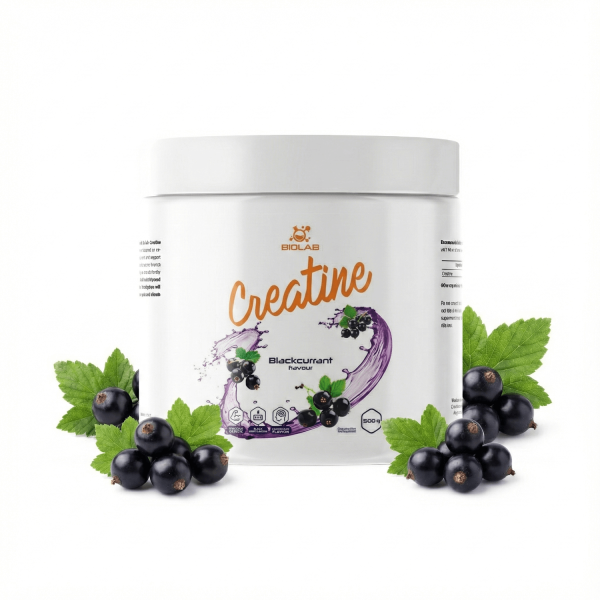
While many companies sell creatine supplements, not all products offer the same level of quality, concentration, or transparency. BIOLAB has distinguished itself by placing measurable quality at the core of its operations.
BIOLAB – quality confirmed by research! Our company takes pride in providing fully transparent reports regarding product concentration and content. Unlike others who may only publish HPLC purity data, BIOLAB ensures access to concentration-specific tests from independently verified laboratories.
What sets BIOLAB apart:
- Verified concentration data made available directly from partner labs
- No misleading information on purity vs. concentration levels
- Full transparency with accessible documentation
- Tests performed in certified peptide and protein analysis laboratories
This attention to detail allows customers to make informed decisions and to trust that the creatine they use meets rigorous quality standards. In a market where misleading claims are common, our approach emphasises evidence, precision, and a commitment to customer satisfaction.
FAQ
Is creatine safe for daily use?
Yes, standard doses of creatine monohydrate are considered safe for long-term use in healthy individuals.
Do I need to cycle off creatine?
There is no physiological need to cycle off. Continuous use of creatine helps maintain muscle saturation and consistent results.
Can I use creatine on non-training days?
Yes, daily intake is recommended, regardless of training, to maintain elevated creatine levels in muscle cells.
Will creatine cause unwanted weight gain?
Initial weight gain is due to water retention within muscles, not fat gain. It does not negatively affect body composition.
What’s the best type of creatine?
Creatine monohydrate remains the most tested and trusted form, offering proven efficacy, safety, and cost-effectiveness.
Posted in:
Tips

Related posts
-
 Which supplements for weight loss - what's the best choice?
Weight loss is a process whose effectiveness depends on the calorie deficit developed. The most important issue is...Read more
Which supplements for weight loss - what's the best choice?
Weight loss is a process whose effectiveness depends on the calorie deficit developed. The most important issue is...Read more -
 Which gym supplements to choose? - beginners guide
First visits to the gym are a time when our motivation is at a really high level. The vision of a sculpted physique...Read more
Which gym supplements to choose? - beginners guide
First visits to the gym are a time when our motivation is at a really high level. The vision of a sculpted physique...Read more -
 How do joint supplements work and when should you take them?
Joint pain is a common problem that affects many people, regardless of age. In many cases, it is caused by overload...Read more
How do joint supplements work and when should you take them?
Joint pain is a common problem that affects many people, regardless of age. In many cases, it is caused by overload...Read more -
 What does ashwagandha help with and how does it work?
Withania somnifera or Indian ginseng is a medicinal plant from regions of the Indian subcontinent. It is more...Read more
What does ashwagandha help with and how does it work?
Withania somnifera or Indian ginseng is a medicinal plant from regions of the Indian subcontinent. It is more...Read more -
 What are fat burners and how do they work?
People who want to reduce quickly are looking for various ways to speed up the entire process. One of them are fat...Read more
What are fat burners and how do they work?
People who want to reduce quickly are looking for various ways to speed up the entire process. One of them are fat...Read more -
 Why and when is it worth using supplements and nutrients?
Supplements, according to their classification, supplement the diet in case of deficiencies of specific ingredients...Read more
Why and when is it worth using supplements and nutrients?
Supplements, according to their classification, supplement the diet in case of deficiencies of specific ingredients...Read more -
 Are fat burners safe?
Fat burners are supplements that work by accelerating the reduction of fat tissue accumulated in the body. Such...Read more
Are fat burners safe?
Fat burners are supplements that work by accelerating the reduction of fat tissue accumulated in the body. Such...Read more -
 AAKG – facts and myths
AAKG, or L-arginine alpha-ketoglutarate, is a dietary supplement that is popular among physically active people...Read more
AAKG – facts and myths
AAKG, or L-arginine alpha-ketoglutarate, is a dietary supplement that is popular among physically active people...Read more -
 Vitamin D deficiency - symptoms and effects
Vitamin D3, known as cholecalciferol, is one of the key ingredients for human health. Despite its importance for our...Read more
Vitamin D deficiency - symptoms and effects
Vitamin D3, known as cholecalciferol, is one of the key ingredients for human health. Despite its importance for our...Read more -
 Can supplements help with stress, nerves and panic attacks? How to get it under control?
In our everyday lives, we often encounter situations that spike our stress levels, causing nerves to fray and,...Read more
Can supplements help with stress, nerves and panic attacks? How to get it under control?
In our everyday lives, we often encounter situations that spike our stress levels, causing nerves to fray and,...Read more -
 What supplements will support your reduction? Healthy and controlled weight loss
Starting a weight loss journey might seem overwhelming due to the many options available. However, finding the right...Read more
What supplements will support your reduction? Healthy and controlled weight loss
Starting a weight loss journey might seem overwhelming due to the many options available. However, finding the right...Read more -
 Are you starting your adventure in the gym? These supplements should be familiar to you!
Beginning a gym routine is a great step towards a healthier lifestyle. Knowing the right supplements for gym...Read more
Are you starting your adventure in the gym? These supplements should be familiar to you!
Beginning a gym routine is a great step towards a healthier lifestyle. Knowing the right supplements for gym...Read more