

-
- show all
-
Trending Now
- Amino acids Amino acids
-
- show all
-
Trending Now
- Nootropics Nootropics
-
- show all
-
Trending Now
- Peptides Peptides
-
- show all
-
- show all
-
Type
- show all
- 5-amino 1MQ
- ACTH 1-39
- Adamax
- Alarelin
- AOD-9604
- ARA 290
- ARG-BPC
- B7-33
- BPC 157
- Show more
- Bronchogen
- Cardiogen
- CJC-1295
- CJC DAC
- Cortagen
- DSIP
- Epithalon
- GC-1 SOBETIROME
- GHK-Cu
- GHRP-2 – Growth Hormone Releasing Peptide
- GHRP-6 – Growth Hormone Releasing Peptide
- GLP-1 – Glucagon-Like Peptide Supplement
- GRF – Growth Hormone Releasing Factor Supplement
- HGH – Human Growth Hormone Supplement
- HGH fragment 176-191 – Human Growth Hormone Fragment 176-191 Supplement
- IGF-1 LR3 - Insulin-like Growth Factor-1 LR3 Supplement
- IGF DES – Insulin-like Growth Factor DES Supplement
- Ipamorelin
- Kisspeptin
- KPV
- Larazotide acetate
- Lipotropin
- LL-37
- Livagen
- L21
- Matrixyl
- Melanotan
- Melanotan 2
- Mots
- N-acetyl
- Oxytocin
- P-21
- Pancragen
- PEG-MGF
- Prostamax
- PT-141
- Retatrutide
- Selank
- Semax
- Sermorelin
- SLU-PP-332
- Snap 8
- TB-4 FRAG+BPC-157 ARG
- TB-500
- Thrombin peptide Tp508
- Thymogen Alpha-1
- Thymosin Alpha 1
- TRH
- Thymalin
- Thymosin
- VIP
- Sarms Sarms
- Cosmetics Cosmetics

Building muscle mass, how to increase muscle mass?
Posted on: 08/25/2023Building muscle mass is one of the main goals that strength trainers set for themselves. This has to do not only with the desire to achieve a certain physique, but also with the desire to increase strength and improve overall performance. The process of muscle building takes time and commitment. It involves a combination of proper diet and strength training. To enjoy the results you dream of, systematic work is required. It is worth knowing that the ability to expand lean body mass is to some extent influenced by our genetics. Some people respond faster to training, which has to do with a greater number of type II fast twitch fibers. On the other hand, people with a preponderance of slow contractile type I fibers need to put in more effort to get satisfactory results. What to take for muscle growth?
What does it look like to build muscle mass?
It is important to keep in mind that the same diet and the same training plan can give completely different results in several people. This has to do with the already mentioned type I and type II fibers. Unfortunately, there is no way to convert slow-shrinking fibers into fast-shrinking ones. Muscle mass gain is also affected by hormonal balance. People who struggle with thyroid disease, for example, may have trouble building muscle mass and losing body fat. So if you want to seriously start working on your figure, you need to address hormonal regulation.
Muscle growth - bet on protein
How to build muscle mass? Absolutely key is the protein supply. Our muscles consist of 70% water and about 25% protein. A large part is made up of branched-chain amino acids BCAAs, which play a very important role in muscle building. Consequently, if we care about growth, it is necessary to provide a large amount of protein. What values are we talking about? It is recommended between 1.8-2 g/kg of body weight. Protein is best supplied with the diet, but protein supplements, which can be added, for example, to a shake and to breakfasts, will also be very helpful. We encourage you to read our article on why and when to use supplements and nutrients (link to article). It contains detailed information about protein nutrients and their properties.
How to perform exercises for muscle mass?
The second component and the way to achieve rapid muscle growth is strength training. However, its intensity is key. Training must provide a stimulus that will force the body to adapt to new conditions. Only in this way will we ensure optimal conditions conducive to muscle expansion. This means that the exploitation of muscles during training is to be close to the limit of their endurance. During the last series of a specific exercise, we must approach the maximum capacity of the muscle. This phenomenon is referred to as muscular decline. How do we know that we have reached this point? By the last repetition, we should already have considerable difficulty in technically correct execution.
It is worth noting that just getting to muscle decline is not necessary. Rapid muscle gain is better influenced by finishing a given series before performing one or two repetitions that would result in reaching the limit. If we feel that we are able to perform more repetitions, it means that the training is too light and will not provide us with satisfactory results.
How to build muscles? Additional information on training
The best solution is to perform a moderate number of repetitions - between 6 and 10. The right choice of weight is also of great importance. Another strategy is to perform more repetitions with less weight. This is reasonable, especially if you plan to build muscle mass at home and cannot count on assistance. Unfortunately, this approach is less effective, as it will not provide us with sufficient progression. Moreover, it is more difficult to recognize at what point we are approaching muscular collapse. There is also a risk of physical fatigue occurring faster than exhaustion. Training with heavy loads and a small number of repetitions is what builds muscle. At the same time, it is an effective way to increase strength. Progression occurs as we add more weights. At this point we provide the body with new stimuli and force it to adapt.
People who are wondering how to make muscle mass should remember that workouts should be done regularly. For beginners, 4 times a week is recommended. Intermediate people can reduce the frequency to 2-3 times a week. It is important to monitor your progress and modify the plan as needed. You may find that for certain muscle groups you need to select more weight or increase the number of repetitions. Another consideration is the type of exercises. Multi-joint exercises work best, as they provide a stimulus to each muscle group. This allows us to build mass faster.
Not sure where to start? Discover our peptide categories according to your specific needs and make the right choice for your body and your goals:
Diet for muscle mass gain - general guidelines
Many people want to combine building muscle mass with fat reduction. However, it should be noted that this is impossible. To build muscle, it is necessary to ensure a positive energy balance. For this reason, fat reduction is not an option. It is therefore necessary to consider what is a priority for us at any given time. Those who want to shed excess weight first can check out the fat burning formulas from Biolab's offer. How to build muscle with diet?
- The key issue is to ensure a fairly large caloric surplus. It is assumed that during muscle building we should increase our body weight by 0.5-1 kg per month. To estimate the amount of caloric surplus, you need to know your total caloric requirements. Too high a caloric supply will not give us satisfactory results, but will only cause fat accumulation.
- The diet must not lack the already mentioned protein. This is because it is responsible for anabolic processes in the body. It is important that the protein is of high quality. It is recommended to consume it up to 2 hours after training. In this way we are able to accelerate the growth of muscle proteins, reduce the risk of muscle damage, accelerate muscle recovery and ensure hormonal balance. The recommended amount of protein in a post-workout meal is 20-40 g.
- Those wondering how to increase muscle mass should also remember to have an adequate supply of carbohydrates. They are the main source of energy during training and must be included in the diet of an athlete. Carbohydrates should account for 40-60% of calories. Thanks to them, muscle glycogen can be replenished, which will improve the body's exercise capacity. The best results will be obtained by combining carbohydrates with protein. This is a way to speed up glycogen synthesis, mitigate muscle damage and speed up training adaptation.
- As for the number of meals, we should adjust it to our preferences and how many calories we need to take in. Intervals between meals longer than 3-4 hours are not recommended, as they can intensify catabolic processes. People who are wondering how to gain weight should remember that the diet must be rich in vegetables. They are rich in minerals and vitamins, which are also involved in the process of building muscle fibers. The minimum is 400 g of assorted vegetables per day.
- People who have a problem with providing an adequate number of calories must remember that the so-called "cheat meal" is not a good solution. Although it makes it easier to meet the caloric norm, in practice we also provide a large amount of harmful fatty acids that raise "bad cholesterol" LDL. Thus, they worsen our health and increase the risk of cardiovascular disease.
Rapid muscle growth - what to take? Recommended supplements
An important part of the diet of athletes are supplements. What to take for muscle mass gain? In addition to the protein supplements already mentioned, creatine works well. It is often referred to as the queen of supplements. It is distinguished by its anabolic effect and supports the process of protein synthesis. Regular intake will translate into greater endurance, speed and faster muscle growth. Other supplements for muscle growth include vitamin D and magnesium. Both ingredients are needed for the body to function properly. Vitamin D deficiency in our country is common, while the need for magnesium increases with the intensity of training. Beginners can also check out our article on choosing supplements for the gym, in which we describe the exact effects of various products (link to article). Biolab also offers pre-workout supplements that provide high levels of energy and stimulation during workouts. In addition, they increase strength and endurance.
Those wondering how to gain muscle mass must not forget the final piece of the puzzle - recovery. Taking care of proper and restorative sleep is crucial for our health and muscle growth. During sleep, hormones are secreted that affect their development and the formation of new cells. Damaged fibers are replaced with new ones - stronger ones. Joints, tendons and ligaments, which are subjected to intense wear and tear during workouts, also regenerate during sleep. How long does it take to build muscle mass? The process is long and depends on many factors. With regular training and proper diet, satisfactory results can be achieved within 6. months to 1. year.
From the very beginning of her cooperation with Biolabshop, Aleksandra Duba has combined professionalism with deep scientific commitment. In the past, she was a physique sports competitor, and her achievements include, among others, an Overall victory at the Olympia Amateur in Italy, which opened her way to the IFBB PRO professional league, as well as a 2nd place at the Arnold Sports Festival in Great Britain and the Polish Championship in 2022.
Her passion for sport and a healthy lifestyle has lasted over ten years. During this time, she systematically and consistently expanded her competencies in the field of dietetics, training, biohacking, and functional medicine, focusing on the practical application of scientific discoveries. Her core interests include the prevention of metabolic and hormonal diseases, anti-aging, and healthspan—the pursuit of maintaining a high quality of life and vitality in the long run.
[readmore]
What does Aleksandra do?
As part of the cooperation, she co-creates the brand's offer and systematically develops scientific competencies, sharing knowledge on her social media profile. She publishes content showing a unique approach to biological issues and materials tailored to audiences with diverse levels of expertise. She also considers the latest scientific reports on products currently in laboratory research phases, including peptides. She encourages the exploration of both basic and advanced aspects of supplementation.
Why is it worth following her progress?
From the perspective of her commitment to a personalized approach, she strives to maximize effects, placing particular emphasis on the holistic nature of well-being. The physical and mental spheres interact in synergy, which opens up infinite possibilities for development and self-improvement.
Choose proven solutions:
Related posts
-
 How to ensure good sleep and regeneration while sleeping?
Sleep is one of the most important activities in our lives, which unfortunately we do not pay enough attention to. We...Read more
How to ensure good sleep and regeneration while sleeping?
Sleep is one of the most important activities in our lives, which unfortunately we do not pay enough attention to. We...Read more -
 Simple and easy weight loss rules for women
Posted in: Diet10/26/2023The fight against excess weight can be long and arduous. The whole process requires not only self-discipline, but...Read more
Simple and easy weight loss rules for women
Posted in: Diet10/26/2023The fight against excess weight can be long and arduous. The whole process requires not only self-discipline, but...Read more -
 What to eat while cutting?
The reduction diet involves limiting energy supply. It is intended for people who want to lose extra weight and get...Read more
What to eat while cutting?
The reduction diet involves limiting energy supply. It is intended for people who want to lose extra weight and get...Read more -
 Mass diet
Posted in: Diet10/26/2023Building muscle mass is a long-term process that requires a proper diet. Its inherent element is also intensive...Read more
Mass diet
Posted in: Diet10/26/2023Building muscle mass is a long-term process that requires a proper diet. Its inherent element is also intensive...Read more -
 How to increase testosterone levels?
Testosterone is one of the most important male hormones responsible for many functions in the body. It affects, among...Read more
How to increase testosterone levels?
Testosterone is one of the most important male hormones responsible for many functions in the body. It affects, among...Read more -
 How to lose weight effectively?
Successful weight loss does not at all require sacrifices, catcalling at the gym and giving up all your favorite...Read more
How to lose weight effectively?
Successful weight loss does not at all require sacrifices, catcalling at the gym and giving up all your favorite...Read more -
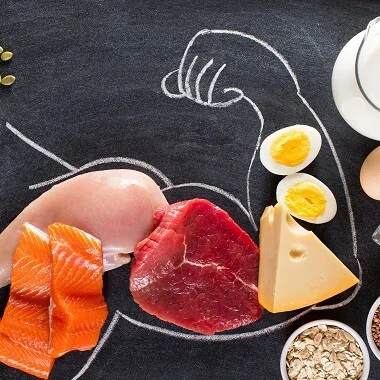 Does protein build muscle mass?
Protein is an extremely important nutrient. It consists of amino acids, which are the building blocks for cells and...Read more
Does protein build muscle mass?
Protein is an extremely important nutrient. It consists of amino acids, which are the building blocks for cells and...Read more -
 How important is sleep for the body and recovery?
Posted in: Diet07/22/2024Sleep is crucial for maintaining overall health and is a cornerstone of mental and physical well-being. While many...Read more
How important is sleep for the body and recovery?
Posted in: Diet07/22/2024Sleep is crucial for maintaining overall health and is a cornerstone of mental and physical well-being. While many...Read more -
 Fatigue, sleepiness and general lack of energy? Don't waste your day and regain your vitality!
Feeling drained as the clock ticks towards noon? It's not uncommon to encounter a slump in energy levels that leaves...Read more
Fatigue, sleepiness and general lack of energy? Don't waste your day and regain your vitality!
Feeling drained as the clock ticks towards noon? It's not uncommon to encounter a slump in energy levels that leaves...Read more -
 Can diet and supplements help relieve endometriosis symptoms?
Posted in: Diet02/05/2025Endometriosis is a complex condition that can cause a range of symptoms, including pain, fatigue, and hormonal...Read more
Can diet and supplements help relieve endometriosis symptoms?
Posted in: Diet02/05/2025Endometriosis is a complex condition that can cause a range of symptoms, including pain, fatigue, and hormonal...Read more -
 Matcha: How to get the most out of It?
04/30/2026Matcha improves memory, focus, and may even delay neurodegeneration – it sounds like the ultimate superfood. However,...Read more
Matcha: How to get the most out of It?
04/30/2026Matcha improves memory, focus, and may even delay neurodegeneration – it sounds like the ultimate superfood. However,...Read more -
 Eating light but still gaining? Meet the hidden cause of your extra weight.
06/01/2026Have you ever wondered why some people seem to have an endless supply of energy, even though they enjoy delicious...Read more
Eating light but still gaining? Meet the hidden cause of your extra weight.
06/01/2026Have you ever wondered why some people seem to have an endless supply of energy, even though they enjoy delicious...Read more
Blog navigationExplore topics
Newsletter
Get a discount on your first order
- Peptides Peptides

Expert in supplementation and innovative health, fitness, and beauty solutions.
Offer
Offer Our company
Our company Contact
E-mail address
info@biolabshop.eu
WhatsApp
+44 739 8562 456ⓒ 2026 Biolabshop. All rights reserved. - Nootropics Nootropics
- Amino acids Amino acids