










Peptides for hair



Why should you consider peptides for hair?
Hair is one of the first things we notice about other people's outward appearance. It's no wonder, then, that everyone dreams of having thick hair and looking simply healthy. However, many people have complexes, whether related to the appearance of their hair or, unfortunately, to the progressive loss of hair. The question arises: is it possible to improve what mother nature has gifted us with?"
There are probably also quite a number of people who are struggling with the consequences of illness or with the side effects of its treatment and would also like to improve the condition of their hair. Of course, care is key here, but how to carry it out properly and effectively?
Although most people associate taking care of their hair with choosing a decent shampoo and combining it with a complementary conditioner, such a duo will not always be enough.
Adequate supplementation
A very important aspect, affecting both the health of the hair and our entire body, is maintaining a balanced diet. Intense weight reduction through a reductive weight-loss diet can cause nutrient deficiencies, among which protein is key. Too low a content of this macronutrient can result in losing a lot of hair, which, by the way, will have a weak structure anyway.
In addition to protein, care should be taken to consume adequate amounts of vitamin H, the so-called biotin. This enzyme - as the so-called "beauty vitamin" - should be provided in the amount of 5000 mcg per day, which will make hair less brittle, make it fall out less often and slow down its graying process. These are all the basics that most likely at least associate.
What's next? That is, the effect of peptides on hair
When we are sure that we are maintaining a proper diet, it is worth leaning into the possibility of getting beautiful and healthy hair. With help comes to us pure science in the form of a few or a dozen amino acids linked by peptide bonds.
Peptides, as they are referred to, are substances that are most often based on naturally occurring components in the body. A properly selected peptide for hair can inhibit, in particular, stress-related hair loss, male and female androgenetic alopecia, as well as help strengthen hair structure.
Best peptides for hair you can buy in our store
In the Biolab store we offer the highest quality peptides, which are always accompanied by detailed instructions for use. When it comes to those that will have a particularly positive effect on your hair, we have ready-made sets from the Women's Set series. Very importantly - contrary to its name, it will benefit not only women's hair.
Women's set - SHAPE ME is a set of 4 peptides: Fragment 176-191, Melantolan and Ipamorelin in a mix with MOD GRF. Shape me will help you burn fat, relieve stress, and take care of your skin.
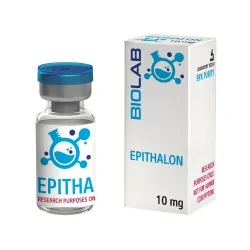
Women's set - KISS MY ASS, which is another set, consists of Epithalon, GHRP-2 enriched with MOD GRF and PEG MGF. It will help firm your body, increase tissue regeneration and improve the quality of your sleep, which will be crucial for the health and beauty of not only your hair, but your entire body.
What are hair peptides?
Hair peptides are short chains of amino acids used in formulations that target the scalp and hair follicles. They interact with skin cells at the root level, where hair growth begins. Depending on the type, they can support regenerative processes, improve scalp blood flow, or influence signals associated with the hair growth cycle. In practice, peptides such as GHK-Cu are often used in products aimed at thinning hair or early-stage hair loss. Copper peptides are associated with tissue repair and may help maintain a healthier scalp environment. Other compounds, such as Epithalon, are being explored for their roles in cellular activity and ageing processes, which can indirectly affect hair condition. Hair peptides are typically applied topically as serums or used in research settings. Their role is not to replace basic hair care, but to address deeper mechanisms linked to hair density and follicle activity. The key difference from standard cosmetic ingredients is that peptides act at the cellular level rather than only improving the surface appearance of hair.
Which peptides are best for hair?
The choice depends on the specific issue, whether it is thinning, shedding, or overall scalp condition. GHK-Cu is one of the most recognised peptides in this area. It is widely used in hair-related formulations due to its connection with skin repair processes and its ability to support the environment around hair follicles. Epithalon appears in more advanced combinations and is often linked to research on cellular lifespan and regeneration. It is not a typical first-choice ingredient for hair alone, but is sometimes included in blends where broader biological effects are considered. You will also find combinations such as GHK-Cu with Epithalon, or mixes that include TB-4 fragments and BPC-157. These are selected by users who are looking beyond single-ingredient products and want a more complex approach. There is no single “best” peptide for everyone. If the focus is on scalp condition and early thinning, copper peptides are usually the starting point. More complex blends are chosen when users are already familiar with peptide-based products and want to test different combinations.
Do hair peptides really work?
Hair peptides can support certain processes linked to hair growth, but they are not a guaranteed solution for hair loss. Their effectiveness depends on the cause of the problem, the stage of hair thinning, and how consistently they are used. Some users report improvements in hair texture, reduced shedding, or better scalp condition after regular use of peptide-based products. This is often linked to improved skin regeneration and microcirculation rather than direct stimulation of new hair growth. In cases where hair loss is driven by genetics or hormonal factors, results may be limited. It is also important to note that peptides are frequently used alongside other methods rather than as a standalone approach. They may complement treatments aimed at reducing hair loss or maintaining existing hair density. Products that provide verified concentration data and laboratory testing give a clearer picture of what is actually being used. This matters because the effect of peptides depends on their real content, not just declared purity.
Related posts


Expert in supplementation and innovative health, fitness, and beauty solutions.

E-mail address
info@biolabshop.eu